
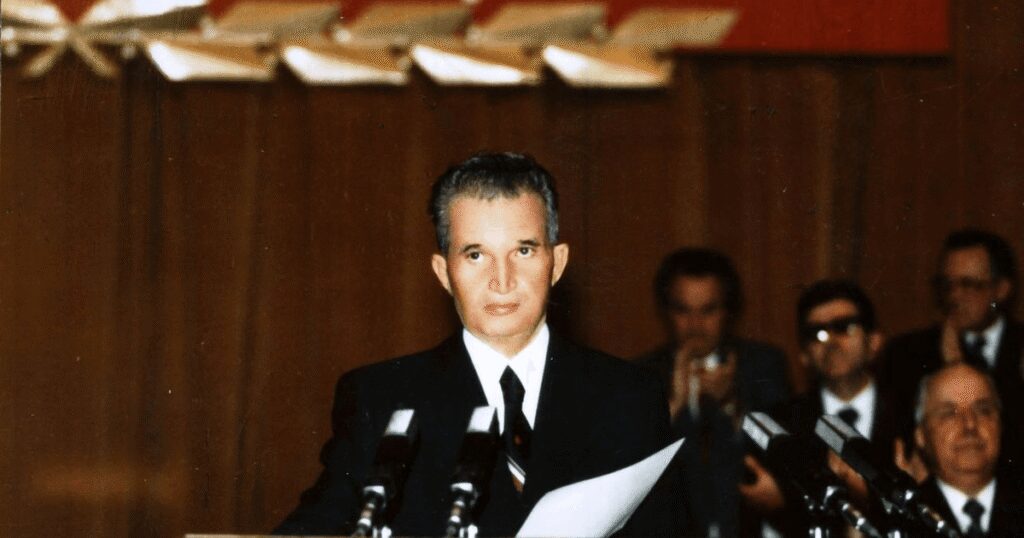
The approach to the December 1989 Revolution in Romania has resulted in an imbalance in research, heavily focused on the people in the streets while neglecting the perspective of Nicolae Ceaușescu. This disparity arises because the event has often been treated in a propagandistic manner, making it difficult to explore Ceaușescu’s thoughts and feelings during this critical moment.
While much is known about the uprisings in Timișoara and the resistance at University Square, little is documented regarding Ceaușescu’s state of mind. Certain widely known events include significant speeches and the moments leading up to his escape via helicopter. However, we lack insight into whether he was aware of the impending danger he faced or if he ever contemplated his possible downfall.
This lack of understanding prompts essential questions: How do leaders respond in moments of crisis? Are they self-aware enough to acknowledge the severity of their situations? A leader possesses an immense amount of trust from their nation, expected to navigate through historical challenges while ensuring their own survival.
Focusing on the night of December 21 to 22, 1989, reveals a stark contrast between actions taken on either side of the metaphorical barricade. Reports indicate that while chaos ensued outside, Ceaușescu remained inside the Central Committee building, inexplicably sleeping during one of the most critical nights of his life. This notion appears inconceivable as many around him were preparing for uprising, signaling the end of his regime.
Skepticism surrounded accounts claiming Ceaușescu slept soundly that evening, as it seemed unimaginable given the circumstances. However, parallels can be drawn to historical figures like Ion Antonescu, who exhibited similar behavior before their downfalls, appearing oblivious to the threats they faced despite receiving dire warnings.
Both Ceaușescu and Antonescu demonstrate how leaders can become detached from reality, navigating their crises with a misplaced sense of invulnerability. Ultimately, these reflections shed light on the complexities of leadership during pivotal moments in history and the significant gaps in understanding the motivations and experiences of those at the center of such upheaval.


