
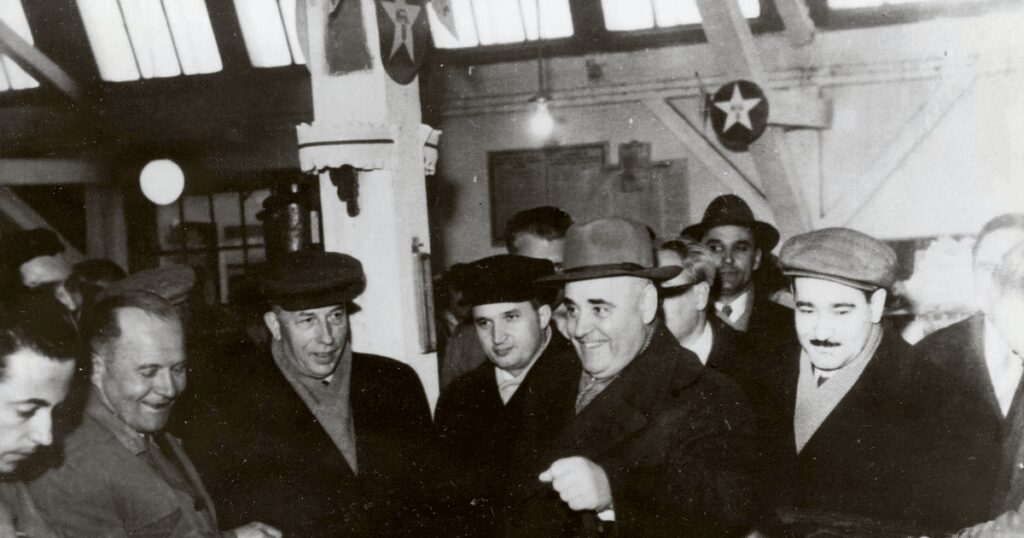
The text examines the historical narrative concerning Romanian leadership and industrialization during the communist era, specifically referencing events around 1964 and the so-called "Valev Plan." Key points include:
-
Leadership Claims vs. Practice: Romanian leaders have publicly claimed to pursue the happiness and prosperity of citizens while often acting in self-interest, both during their lifetimes and posthumously.
-
Historical Context: Post-1989 historians assert that the Soviet Union sought to undermine Romania’s industrial potential during the 1960s, particularly through the Valev Plan. Gheorghe Gheorghiu-Dej is portrayed as a heroic figure, protecting Romanian industry.
-
Reevaluation of Valev’s Intentions: The document criticizes the misinterpretations and misrepresentations regarding Emil Borisovici Valev’s writings. Valev’s work, which was published in the same year, praised Gheorghiu-Dej and outlined industrial plans for Romania, emphasizing significant projects like the metallurgical plant in Galați.
-
Economic Dependencies: It discusses the economic reliance that Romania would have faced if these industrial plans were implemented, particularly regarding iron ore and coal imports from the Soviet Union. This dependency posed a threat to national autonomy.
-
Logistical Challenges: The text highlights logistical issues related to transportation and the need for maritime shipping channels for the metal products produced in Galați, stressing the economic ramifications and the challenges of inefficiencies during droughts.
-
Misrepresentation by Historians: Contemporary historians are accused of sanitizing or fabricating historical narratives around the events of 1964, suggesting an independence from Moscow that did not exist. Valev is depicted as a scapegoat of the Bucharest regime.
-
Call for Historical Reevaluation: The piece argues for the exclusion of certain erroneous ideas about the Romanian communist regime from academic texts and textbooks, advocating for a more accurate historical record that acknowledges the true nature of interactions with Soviet experts.
- Caution Against Myths: The author urges historians to recognize and correct what they see as critical misinterpretations and exaggerations surrounding the concepts of "national communism" and Romania’s supposed independence in relation to the Soviet Union.
Overall, while the text champions a more truthful recounting of history, it critiques the sweeping narratives that have emerged in contemporary historical discourse, pushing for clarity about Romania’s past under communist rule.


