
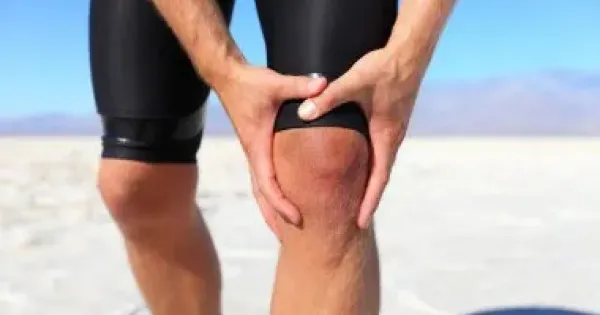
Knee Anatomy and Biomechanics
The knee, an intermediate joint of the lower limb, offers significant stability in full extension, essential for bearing the body’s weight and providing mobility over uneven surfaces. Its complex structure is supported by the ends of the femur, tibia, and patella. The distal femur features a trochlea, flanked by two condyles that rest on the tibial plateaus, with the patella positioned anteriorly to the femur.
A crucial component of the knee’s joint capsule is its synovial membrane, which facilitates the movement of the bony structures through the secretion of synovial fluid. This membrane also covers the Hoffa’s fat pad, which fills the space between the tibia and the patellar ligament, promoting smooth gliding.
Muscular Movements
Active movements of the knee are generated by several muscle groups. The primary extensor muscle is the quadriceps, composed of four muscle bodies that connect via a common tendon to the tibial tuberosity. The tensor fasciae latae acts as an accessory extensor when the knee is partially extended. The main flexor muscles are located in the posterior thigh and include the biceps femoris, semimembranosus, and semitendinosus, supported by accessory muscles such as the gastroc meniscus, plantaris, sartorius, and gracilis. The knee also possesses external and internal rotators, with the biceps femoris and tensor fasciae latae serving as external rotators, while the semimembranosus, popliteus, and the "goose foot" muscles (semitendinosus, sartorius, and gracilis) contribute to internal rotation.
Biomechanics of the Knee
The knee’s multi-faceted anatomical structure ensures critical stability and movement, vital for standing, walking, and various daily or professional activities. Ligaments play a crucial role in stabilizing the knee, including the cruciate ligaments, which support rotational stability, and the collateral ligaments, which stabilize against varus and valgus forces. The lateral stability apparatus comprises the fibular collateral ligament and dynamic stabilizers like the popliteus tendon and iliotibial band.
Flexion and extension movements occur around a transverse axis that crosses the femoral condyles, with passive flexion reaching an impressive range of 160 degrees, as the heel can touch the buttocks. Active flexion averages 120 degrees but can extend to 140 degrees when the hip is flexed. The efficiency of the hamstring muscles in flexion also depends on the position of the hip joint.
Role of Menisci
The knee’s two menisci serve key functional roles: filling the gaps between the femur and tibia, allowing for efficient force distribution, centering the femur during movement, providing lubrication, and acting as shock absorbers. The patella, connected to the tibia by the patellar ligament, moves over the femoral trochlea, contributing to the knee joint’s stability and movement.
Rehabilitation of Knee Injuries
Post-traumatic knee conditions cover a broad spectrum of lesions affecting various anatomical structures. Regardless of the specific injury, trauma typically impacts knee functionality, resulting in instability and pain. Hence, pain relief is prioritized in any recovery program, which may include various methods tailored to the individual case.
Immediate rest for the injured segment is critical, often positioning the patient in a slight flexion (20-30 degrees) to allow for capsule-ligament relaxation and pain reduction. However, prolonged positions risk retraction and swelling, necessitating active and passive flexion-extension movements as soon as possible.
Gradual reintroduction to movement is essential, starting from crutch usage to transitioning to a cane and eventually encouraging weight-bearing activities. Stability restoration is vital in rehabilitation, relying on the integrity of the knee’s ligamentous and muscular structures to prevent instability.
Strengthening and Functional Recovery
Recovery focuses on enhancing the passive stability of affected ligaments, often utilizing non-surgical techniques for isolated ligamental injuries. For more complex injuries, surgical intervention may be necessary, while braces may offer support during rehabilitation. Gentle stretching can enhance proprioceptive and ligament strength, alongside exercises targeting the quadriceps, which are crucial for stability, particularly the vastus medialis.
Quadriceps strength diminishes with immobilization, making recovery targets crucial. Active recovery strategies include isometric exercises and progressive loading. In addition, pharmacological treatments using products from the Leni Complex range have been implemented, with acute-phase management emphasizing localized pain relief, while chronic-phase treatment involves topical gels featuring natural anti-inflammatory compounds.
Case Studies
Research involved four patients with varying degrees of gonarthrosis, all of whom underwent the outlined rehabilitation program combined with pharmacological treatments. Each patient’s evaluation indicated significant improvements in joint mobility and muscle strength, affirming the treatment efficacy.
Conclusion
The rehabilitation of knee injuries post-trauma necessitates a multimodal approach focused on pain relief, restoring stability, and strengthening musculature to facilitate functional recovery. The insights drawn from anatomical analysis and case studies underscore the importance of tailored treatment plans in achieving optimal outcomes for patients with knee disorders.
References
The bibliography provided includes foundational texts in surgical pathology, anatomy, and rehabilitation techniques, ensuring a comprehensive understanding of knee injuries and treatment methodologies.
Overall, the complexity of the knee joint warrants a detailed understanding of its biomechanics, muscular interactions, and potential rehabilitation strategies to ensure effective recovery from injuries.


