
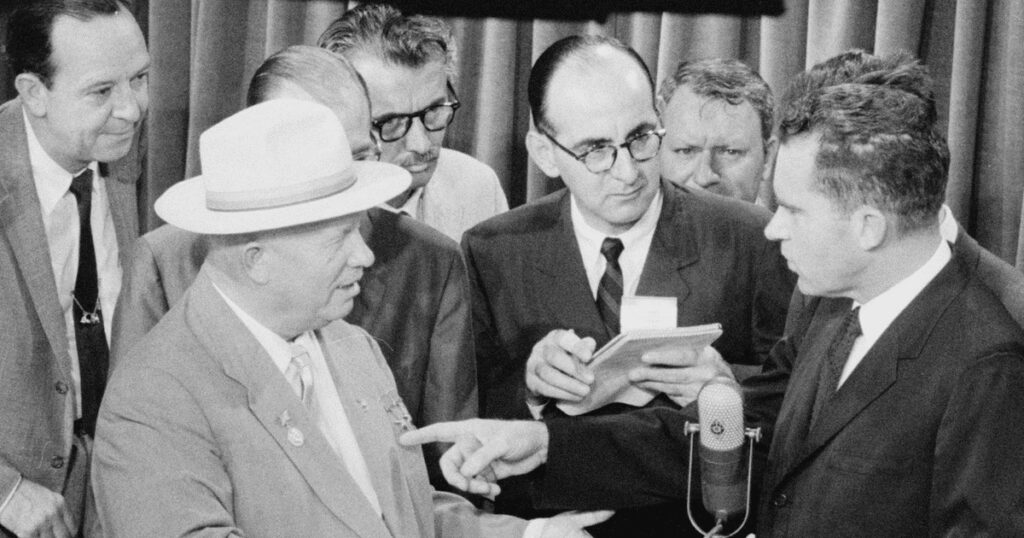
The text discusses the long-standing conflict between the Soviet bloc and the American bloc, characterized as the Cold War—a confrontation that often played out indirectly, particularly through proxy wars like those in Korea and Vietnam. Both sides, while deeply entrenched in their ideologies, showed willingness to engage in hostilities, resulting in substantial loss of life. However, there remained opportunities for political and business negotiations behind the scenes.
Russian historian Dmitri Volkogonov’s research into Lenin’s life reveals that leaders in both military powers had many hidden interests, often prioritizing financial gain over the lives of soldiers sacrificed for ideological conflicts. Notably, the Soviet Union, despite having fertile land, struggled to produce sufficient food for its population, leading to reliance on American farmers for cereal and meat. Facing financial constraints, the Soviet state even transferred significant amounts of gold to Western banks.
The Soviet leadership lacked adequate precious metals to engage effectively with international capitalism and constantly sought new solutions to feed an increasingly demanding urban population. This led to the export of natural resources such as oil and titanium to the West, which contributed to the development of American military aircraft, including the F-16. The Soviet Union, which had once been a major grain exporter, found itself dependent on capitalist nations for survival.
The text argues that American politicians eagerly sought deals with Russia, often disregarding the implications for millions of lives in favor of financial interests. Despite decades of conflict with the peasantry, Soviet leadership never resolved agricultural issues. The regime under Mikhail Gorbachev, despite his reputation as a reformer, failed to produce tangible improvements, especially considering his background in agricultural matters.
The communist regime in Russia focused heavily on developing a vast armaments industry, with significant military personnel contributing to a decline in living standards. Stalin’s solution to economic challenges involved brutal measures, including the execution and imprisonment of millions, which later administrations did not replicate with the same severity.
Overall, the Cold War was marked by a complex interplay of ideology, military engagements, and underlying economic interests, painting a picture of a global stage where lives were often secondary to political and financial maneuvers.


