
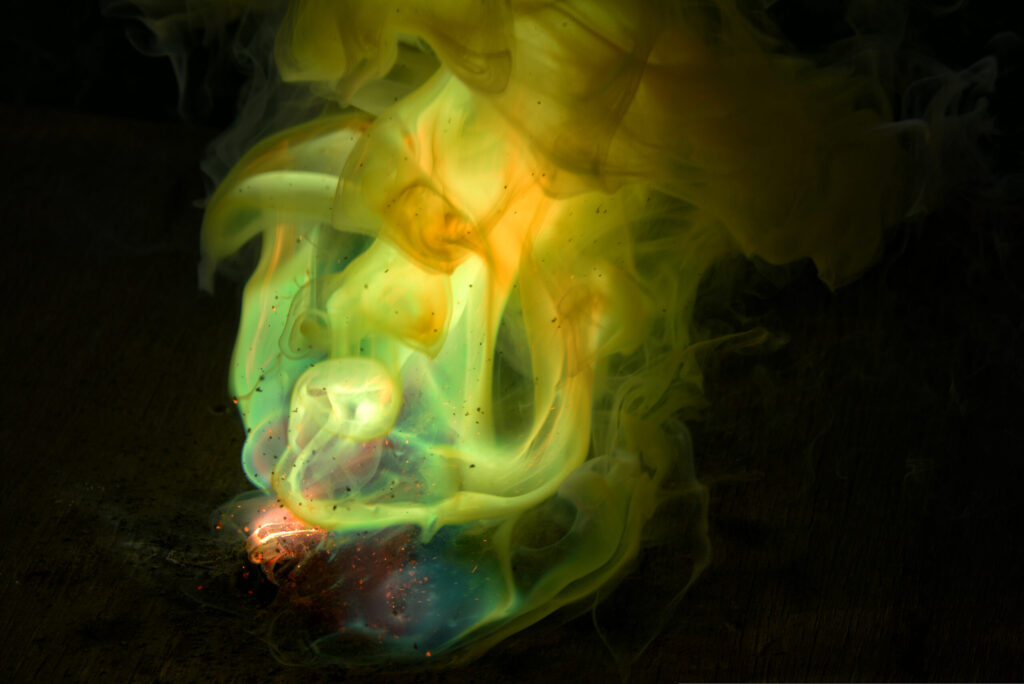
The origins of life on Earth are a complex and intriguing subject. Recent research suggests that life may have begun in primordial underwater "chemical gardens" rich in hydrogen and iron. Conducted by researchers from Germany, this study reproduces ancient ocean conditions in a lab, revealing that ancient life forms still thriving in ocean depths can flourish in these primordial environments.
Today’s ecosystems are deeply interdependent, making it difficult to imagine how life first emerged on a lifeless planet. Early organisms had to rely solely on the minerals available without the presence of oxygen or photosynthesis. This scenario parallels some deep-sea marine organisms that continue to survive near hydrothermal vents where sunlight cannot reach.
Deep-sea microbes extract electrons from hydrogen emanating from Earth’s core, utilizing a process older than the genetic codes we know, called the acetyl-CoA pathway. This method is notable for being the only way to convert inorganic carbon into organic compounds without the use of enzymes. However, the oceans of early Earth were rich in dissolved iron compared to today. A research team led by geochemist Vanessa Helmbrecht from Ludwig Maximilian University of Munich set out to investigate the implications of this dissolved iron by simulating ancient oceanic conditions in a controlled environment.
Their research examines hydrothermal deposits rich in iron sulfide from the early Archean period (about 4 to 3.6 billion years ago), which are interpreted as some of the earliest signs of life on Earth. The connection between abiotic hydrogen production in iron sulfide-rich chemical gardens and early life has been sparse in prior studies. The team focused on deep-sea hydrothermal vents, like those found on the Central Oceanic Ridge, where organisms exist in conditions similar to those of early Earth.
For their experiment, they selected a unicellular archaeon, Methanocaldococcus jannaschii, originally collected from a hydrothermal vent off the west coast of Mexico. This organism utilizes the acetyl-CoA pathway, relying on carbon dioxide and hydrogen as primary energy sources. The team explains that abiotic hydrogen would have been a significant electron donor, while carbon dioxide served as a key acceptor for the first cells.
In the lab, the researchers created a miniature version of a hydrothermal vent, infusing a sulfide fluid into an oxygen-free water solution, which formed a black precipitate within 5-10 minutes. At high temperatures, iron and sulfur in this microenvironment formed iron sulfide minerals. Surprisingly, M. jannaschii thrived despite the various environmental differences.
Initially, Helmbrecht’s team anticipated minimal growth as they added no extra nutrients, vitamins, or trace metals. However, the archaeon not only expressed genes linked to the acetyl-CoA metabolism but also showed notable growth. The cells tended to cluster around particles of mackinawite, resembling some of the oldest fossil traces of life, supporting the theory that these "chemical gardens" nourished Earth’s first microorganisms.
This research serves as evidence that the recipe for the acetyl-CoA metabolism emerged in extreme, energy-poor environments, possibly igniting the first sparks of life on Earth. Their findings contribute significantly to our understanding of life’s origins and are published in Nature Ecology & Evolution.
In summary, this groundbreaking work provides insight into the conditions that may have facilitated the emergence of life on our planet, laying the groundwork for further investigations into the origins of biology as we know it.


