
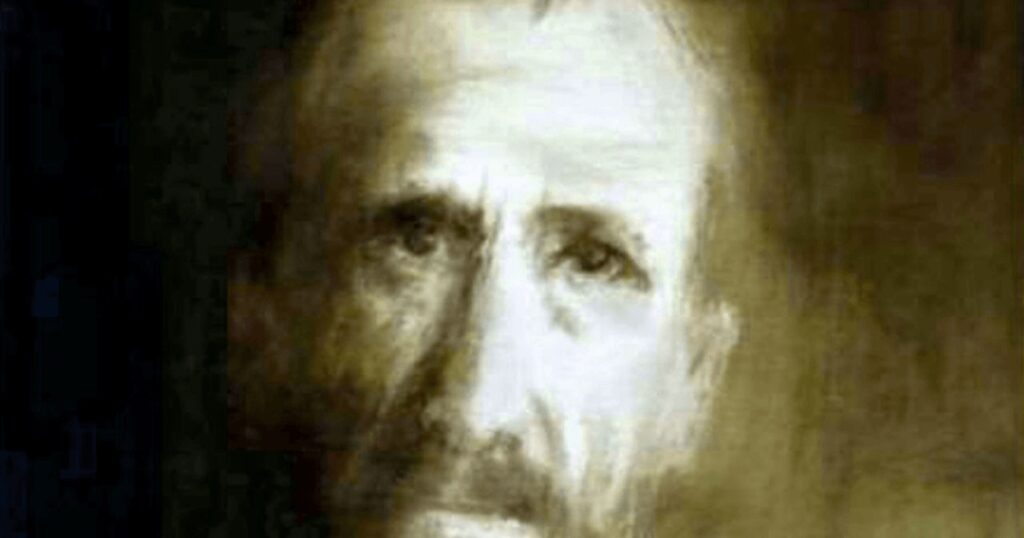
The Academia Civică Foundation – Memorial of the Victims of Communism and the Resistance, with the support of the Romanian Cultural Institute, is set to host an exhibition titled "Ultima privire: sub gloanțele comunismului" (Last Look: Under the Bullets of Communism). This exhibition will showcase 25 portraits of death row victims during the Great Terror in the USSR from 1937-1938. It will be held from April 4 to June 15, 2025, at the Memorial’s premises located at Jean-Louis Calderon Street No. 66, Bucharest.
The exhibition will officially open on April 4, 2025, at 17:00, featuring speeches by prominent figures including Ana Blandiana, a writer and co-founder of the Sighet Memorial and the Academia Civică Foundation; Armand Goșu, a historian; and Liviu Jicman, the president of the Romanian Cultural Institute.
The artwork presented in "Ultima privire: sub gloanțele comunismului" was created by Madeleine Melot, a French artist. The collection consists of 25 portraits inspired by photographs found in Moscow’s archives by Polish journalist and photographer Tomasz Kizny. These photographs were published in Kizny’s 2013 album titled "Marea teroare din URSS (1937-1938)". Melot opened a similar exhibition in 2021 as a tribute to her Franco-Polish friend Jacques Rossi, a Gulag survivor, and to all the victims of the Great Terror.
In December 2024, Melot generously donated this series of portraits to the Memorial of the Victims of Communism and the Resistance, enhancing the Memorial’s collection of fine art, which includes works by notable Romanian artists such as Camilian Demetrescu, Ovidiu Maitec, and others.
The Academia Civică Foundation expressed its gratitude to Pierre Gairret, Melot’s husband, for ensuring that her works reached the Sighet Memorial, fulfilling her wish for them to serve as a testament to the victims of totalitarian regimes.
Madeleine Melot (1936-2025) was a graduate of the National School of Fine Arts in Paris and held a deep fascination for landscape painting. According to Professor George Pirson, Melot viewed landscapes not merely as backgrounds, but as integral presences in her work. She explained her artistic process, emphasizing a meticulous preparation of the wood, which allowed for a rich expressive quality through her brushwork.
Art critiques highlight her intent in creating these portraits—not to reinterpret but to faithfully reproduce the fearful expressions of her subjects. Thierry Wolton, the author of a global history of communism, praised Melot’s ability to give life back to these individuals, allowing their buried voices to resonate through her art. He emphasized the transformative act of her artwork as not only a representation of historical truth but also as a means to reclaim the lost identities of those sacrificed by a brutal political system.
Historical and art perspectives point out that Melot’s portraits contribute to the collective memory of society, positioning each victim as more than a mere statistic, but as individuals with names, ages, and stories. Marta Chrzanowska-Foltzer noted that by engaging with this exhibition, viewers must choose between remembrance or oblivion, underlining the importance of collective responsibility in acknowledging and passing on the legacy of the past.
Philosopher Marguerite Léna emphasized the multifaceted nature of Milot’s work, noting that her selection of subjects was both intuitive and a deeply felt tribute to the victims of Stalinist violence. She pointed out that Melot’s art aims to transcend the raw brutality of totalitarianism, presenting beauty as a counterforce to the dehumanizing effects of state-sanctioned violence.
By opposing the simplistic and lethal reduction of individuals to mere numbers or labels within a totalitarian narrative, Melot’s nuanced portrayals serve to remind viewers of the humanity inherent in each victim. Her art thus becomes a celebration of not just the lives lost, but also a call to action for present and future generations to remember and honor these histories through compassion and artistic expression.
In summary, the exhibition "Ultima privire: sub gloanțele comunismului" represents a poignant artistic and historical testament to the victims of one of the darkest chapters in modern history, urging contemporary society not only to remember but also to engage thoughtfully with the lessons of the past.


