
On Sunday, April 27, from 12:00 PM to 4:00 PM, the Garden of the Map Museum opens its doors for a communal lunch prepared by Chlorys, a visual and sound artist passionate about gastronomy and deeply connected to observing the natural environment.
This lunch will be accompanied by a tasting of fermented beverages made from wild flora, presented by university lecturer Dr. Vasilica Luchian, who will also deliver a talk about aromatic plants and their role in supporting immunity. This event is part of the “Community Garden at the Map Museum” project, which runs from September 2024 to April 2025, as stated in a press release from the Map Museum.
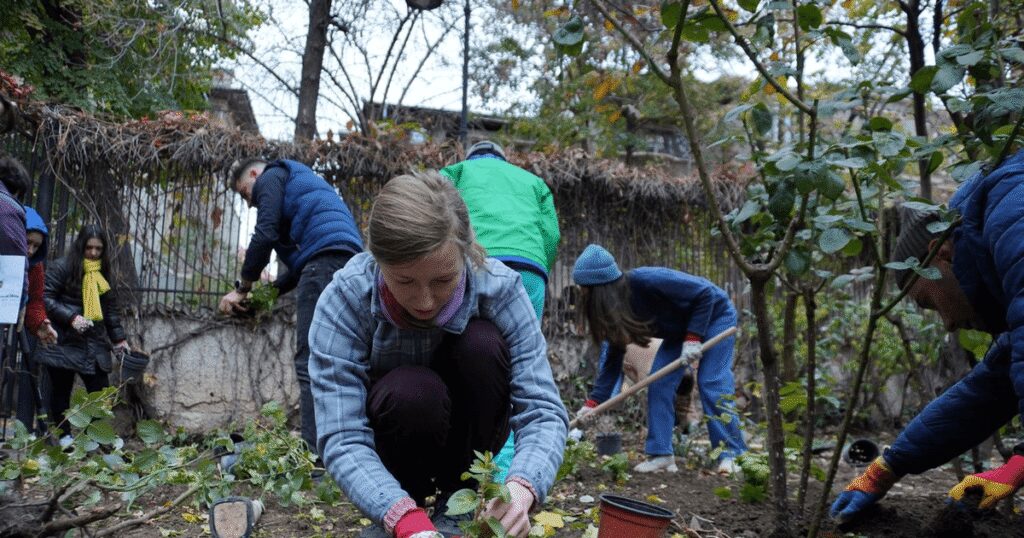
The “Together in the Garden” series consists of community events associated with the “Community Garden at the Map Museum” project, initiated by Club Clorofila and executed from September 2024 to April 2025, as noted in the press release. During this timeframe, Club Clorofila, alongside a multidisciplinary team of specialists and 55 volunteers, revitalized and activated the Garden of the Map Museum in accordance with urban ecology principles, transforming it into a small green refuge in the heart of the city. This revitalization was achieved through six gardening workshops directed by experts, attracting local residents from London Street and the Dorobanți neighborhood, as well as citizens from various areas of Bucharest.
The “Community Garden” project illustrates how a thoughtfully designed ecological intervention can transform a small green space into a valuable resource for city residents—most of whom lack personal gardens, yet are eager to spend time in nature without leaving the city.
As a result of the workshops, the garden now features over 20 new species of perennial plants and shrubs—perennials reduce resource needs and promote natural balance in urban gardens and landscapes. The garden also includes a small aromatic herb garden that attracts essential pollinators, filters air, improves soil, and creates a sensory relaxation space; two areas with micro-meadows that provide crucial food sources for pollinators like bees, butterflies, and other beneficial insects; and recreational zones aimed at facilitating moments of relaxation and reflection for museum visitors and community members.
This project highlights the essential role that public cultural institutions can play in urban regeneration processes. By remaining open to ecological initiatives, these institutions can transform the green spaces they manage into beneficial microclimates for people and urban biodiversity.
Chlorys, the artist responsible for the communal lunch, lives and works in Bucharest. She is a co-founder of the “Corp” platform, along with von Bülove and Admina, which is dedicated to supporting and promoting artists who identify as female and non-binary within the realms of electronic music and its associated culture. She has been a resident for three years at Noods Radio with the show “Alien Flora” and currently hosts “Primordial Soup” on LYL Radio. Chlorys has exhibited her works in various venues, including Suprainfinit Gallery, MNAC Anexa, Ivan Gallery, and the Botanical Garden in Bucharest.
Dr. Vasilica Luchian is a university lecturer at the Faculty of Horticulture (USAMV Bucharest), within the Department of Landscaping, Biodiversity, and Ornamental Horticulture. She has a research background in medicinal, aromatic, and dye plants and received the SRH Award in 2018 for her scientific contributions in this field.
Club Clorofila facilitates simple moments of reconnection with nature amid the urban landscape. They utilize horticulture, contemporary art, and gastronomy as tools to activate and revitalize Bucharest’s existing natural heritage, aiming to restore it to its residents. The organization’s mission is to bolster resilience in the face of climate change while enhancing social cohesion in urban settings.
The Map Museum in Bucharest is one of the few cultural institutions of its kind in the world. Through careful stewardship of its heritage and interpretation practices, the museum seeks to become a valuable resource for the community, promoting research, interactivity, lifelong education, and creative engagement. Additionally, the museum supports natural heritage awareness by integrating initiatives that explore the relationship between community and environment. In this way, they not only value maps as historical artifacts but also contribute to the formation of identity and ecological awareness within the community.


