
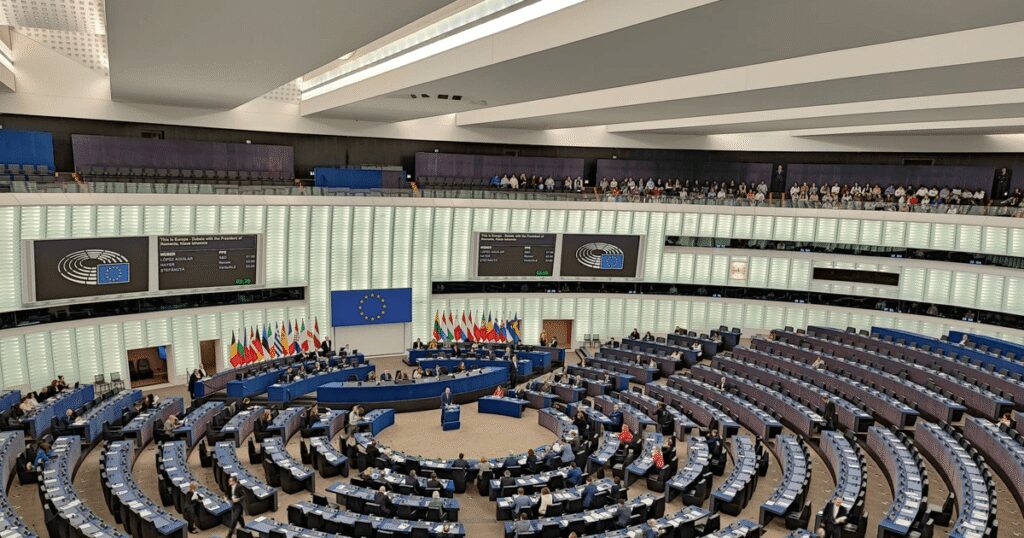
Summary: The Resilience of European Democracy in a Changing Landscape
As Europe grapples with rising populism, technological changes, and fluctuating global alliances, the resilience of its democratic institutions comes into question. This analysis delves into the evolution of European democracy, the European Union’s (EU) role in upholding democratic values, the influence of digitalization on political participation, and the EU’s potential as a democratic model for other regions.
1. The Evolution of European Democracy Amid Populism and Political Shifts
European democracy is experiencing profound transformations, driven by both internal and external factors. The rise of populist movements, exemplified by Germany’s Alternative for Germany (AfD)—which garnered 21% of votes in recent elections—illustrates the shift toward nationalist and anti-establishment sentiments. Additionally, the cancellation of Romania’s 2024 presidential elections due to alleged foreign operations highlights vulnerabilities within democratic frameworks.
These developments pose significant challenges to the EU’s core values, particularly democracy and rule of law. The idea of a "militant democracy" has surfaced, advocating for proactive steps to counter anti-democratic threats within member countries. However, navigating between necessary interventions and respect for national sovereignty remains a contentious subject.
2. The EU’s Role in Defending Democracy Within and Beyond Its Borders
The EU has taken on the role of safeguarding democratic values, both internally and on the international stage. Initiatives, such as the European Democracy Action Plan, aim to bolster democratic resilience by tackling disinformation and foreign interference. The Digital Services Act further ensures accountability among online platforms to mitigate the spread of harmful content.
Externally, the EU’s response to geopolitical challenges, including the war in Ukraine, showcases its commitment to supporting democratic governance outside its borders. European Commission President Ursula von der Leyen has emphasized Europe’s role in promoting democracy during global crises.
3. Digitalization and Democracy: The Impact of Technology on Political Engagement
Digital technologies are reshaping political engagement across Europe. Tools such as online voting, participatory budgeting, and e-government services enhance accessibility and citizen involvement in governance. Estonia stands out as an exemplary case for successfully integrating digital platforms into its political infrastructure.
However, the digital age also introduces challenges. The rampant spread of disinformation, algorithmic biases, and data privacy issues threaten democratic integrity. In response, the EU is working to promote digital literacy and enforce regulations aimed at ensuring transparency and accountability in online environments.
4. Can the EU’s Democratic Model Inspire Other Regions?
The EU’s democratic approach—characterized by multilateralism, rule of law, and social welfare—presents a potential framework for other regions seeking democratic development. In contrast to the U.S., where political polarization and institutional challenges are prevalent, Europe’s focus on collective governance and citizen rights offers an alternative perspective.
Despite its strengths, the EU must confront internal disparities to sustain an inclusive and adaptable democratic model. By reinforcing its commitment to democratic ideals and effectively managing both technological and political dynamics, the EU can enhance its position as a global standard-bearer for democracy.
Conclusion
Europe finds itself at a critical juncture, facing the dual realities of internal political volatility and external pressures. By actively confronting populism, protecting democratic institutions, responsibly embracing digital advancements, and promoting its democratic values globally, the EU has the opportunity not only to strengthen its internal democratic structures but also to serve as a guiding light for democratic development worldwide.
In summary, the evolution and resilience of European democracy in the face of modern challenges highlight the necessity for continuous adaptation—both in governance and in the safeguarding of democratic principles. The EU’s proactive approach can establish it as a beacon of hope for other regions striving for democratic integrity and governance.


