
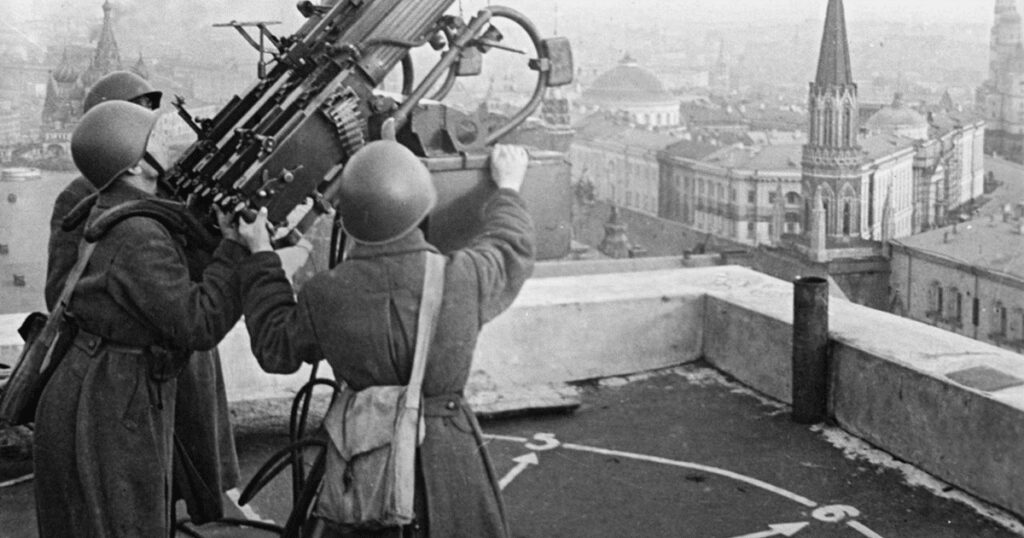
The content discusses the tactics used by the German military during World War II, focusing on the operations leading to the infamous Battle of Stalingrad. It begins with a personal anecdote about the author’s experience at an airport before delving into the historical context provided by Jean Lopez’s 2008 book "La bataille au Bord du Gouffre," which is noted as the best account of Stalingrad the author has read so far.
The author introduces Operation Fall Blau, which was preceded by Operation Kremlin. This operation was a deceitful maneuver by the Germans to convince Stalin that their main attack would target Moscow, thereby concealing their real objective of advancing south into Russia. The author highlights that Stalin was largely misled by this strategic deception, showing how effective disinformation can be.
Included in this disinformation strategy, as noted by Joseph Goebbels in his journal entries, was the dispatch of a journalist, M. Kriegk, to Lisbon. The goal was to manipulate his drunken state to embarrassingly divulge privileged information about the Reich’s intentions to the Western press, falsely leading them to believe the attack would occur in the south rather than Moscow.
In the first weeks of June 1942, the German Group Center aimed to further the deception regarding the Moscow attack. They distributed sealed maps of Moscow to their units, scheduled to be opened on June 10, which they hoped would mislead Soviet intelligence. The Germans placed bets on Soviet spies, relying on the assumption that agents within the NKVD (Soviet secret police) would take this information seriously.
The author conveys a sense of unease about the lengths to which the Germans went to create a landscape of misinformation. They deployed spies to critical locations like Moscow, Kalinin, and Tula, with expectations that Soviet counterintelligence would capture some of them, thus reinforcing the fabricated narrative about an impending assault on Moscow. The notion was that captured spies would reveal information, further diffusing the notion of a direct attack on the Soviet capital and fuelling confusion.
An unsettling aspect of this elaborate ruse is highlighted regarding how deep the deception went — even prisoners of war were manipulated with rumors about a Moscow offensive, creating a bleak picture where nothing could be taken at face value. The author reflects on this chilling reality, suggesting that, in a world rife with misinformation, one might even begin questioning the validity of immediate experiences, such as whether it was indeed snowing.
Overall, the piece underscores the complex layers of wartime strategy, particularly emphasizing the psychological dimensions of warfare and the pernicious effects of disinformation. This strategic chaos aimed to undermine both military and civilian morale on the Soviet side, showcasing the grim realities of deceit during war.


