
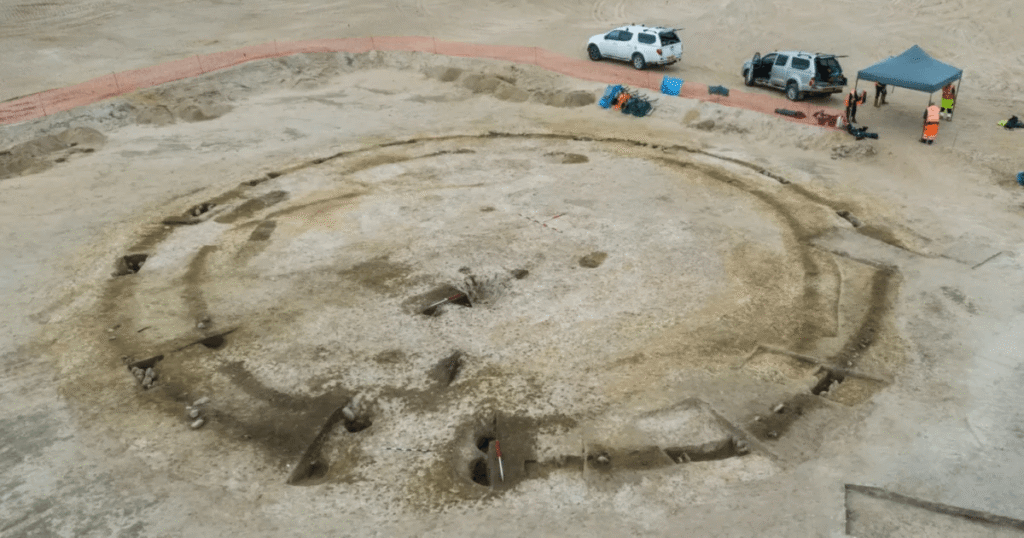
Recent archaeological excavations in the Inverness area have unveiled a remarkable prehistoric wheel associated with a cart, a significant discovery made during the construction preparations for the Old Petty Championship golf course. This find sheds new light on ancient ceremonial practices and the lifestyles of past inhabitants of the Highlands, dating back thousands of years.
The wheel was uncovered within a cremation pit, theorized to be several millennia old, alongside a Bronze Age urn estimated to be around 3,500 years old, flint tools, grinding stones, and evidence of at least 25 wooden structures dating to the Neolithic period. Collectively, these artifacts paint a vivid picture of life in the Highlands from approximately 6,000 years ago until the Middle Ages.
Andy Young, the lead archaeologist from Avon Archaeology Highland, emphasized the rarity of the cart wheel, noting, “These are incredibly rare objects. None of us had ever seen one during any excavation.” Initially skeptical of the find, Young believed it might have been a modern item. However, subsequent investigations confirmed its historical significance, potentially marking it as the first cart element ever discovered in the Highlands and one of only five known in all of Scotland.
The site chosen for the golf course development by Cabot has proven to be a treasure trove of historical artifacts. These discoveries not only highlight the ceremonial practices of ancient peoples but also their agricultural innovations. Stuart McColm, vice president of golf course development at Cabot, expressed pride in the project’s historical context, stating, “It’s overwhelming to think that our new golf course, Old Petty, will be built on land with such a historical significance.”
In line with Scotland’s best archaeological practices, efforts are being made to preserve key elements of the site, including a prehistoric ceremonial circle, which has been carefully reburied in its original location. The collaborative effort between Cabot and Avon Archaeology Highland has been praised as a model of responsible development that balances heritage protection with modern construction.
The discoveries will be meticulously documented and subjected to radiocarbon dating, with final reports expected to be published around the golf course’s official opening in 2025. The artifacts will eventually be transferred to museums in Inverness and Edinburgh, ensuring the preservation of this glimpse into the past for future generations.
As the Old Petty Championship golf course takes shape, it stands as a living testament to the rich history of the Highlands, inviting both golf enthusiasts and history lovers to appreciate the ancient stories lying beneath the surface. This project highlights not only the importance of archaeological finds in understanding our past but also the need for sensitivity in modern development efforts. The successful collaboration between developers and archaeologists exemplifies how modern infrastructure can coexist with the preservation of cultural heritage.


