
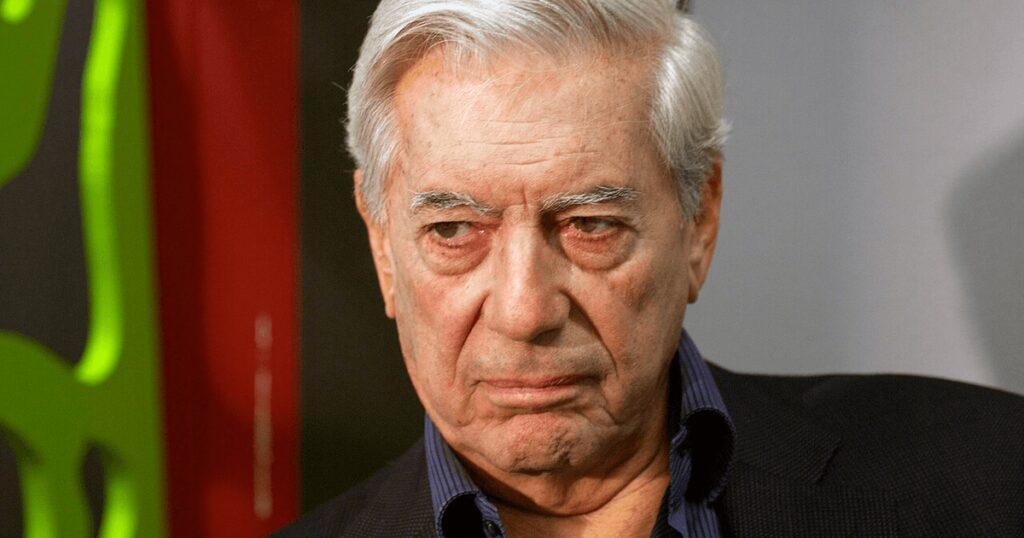
Mario Vargas Llosa, celebrated Peruvian writer and Nobel Laureate, passed away on April 13, 2025, at the age of 89 in Lima, Peru, surrounded by his family. His son, Alvaro Vargas Llosa, who is also a noted political commentator, announced his peaceful passing via social media. In the months leading up to his death, there had been speculation regarding Vargas Llosa’s declining health, as he had become increasingly withdrawn from public life.
Vargas Llosa emerged as a significant figure in Latin American literature in the 1960s and continued to write novels and essays for decades, with his works translated into numerous languages around the world. He received numerous honorary doctorates, awards, and distinctions throughout his career, but his most prominent accolade was the Nobel Prize in Literature, awarded to him in 2010. The Nobel committee recognized him for his exploration of power structures and insightful portrayals of individual resistance, rebellion, and defeat.
Born Jorge Mario Pedro Vargas Llosa on March 28, 1936, in Arequipa, Peru, Vargas Llosa grew up in a middle-class family. His early childhood was spent in Bolivia before moving back to Peru. In his teenage years, he attended a military academy in Lima, which would later inform some of his writing. He began his career as a journalist and started writing short stories while studying law and literature. His first publication came in the late 1950s, and by 1959, he had relocated to Paris, where he would broaden his literary horizons.
His debut novel, “La ciudad y los perros” (The Time of the Hero), published in 1963, won immediate acclaim, with themes inspired by his experiences at the military academy. Followed by his second novel, “La Casa Verde” (The Green House), published in 1966, Vargas Llosa established himself as a leading voice in Latin American literature.
Vargas Llosa’s contributions to literature extended beyond his novels; he was a passionate political thinker, often engaging in discussions around democracy and totalitarianism. His writing style and narrative techniques, including shifting perspectives and intricate plotlines, have influenced countless writers and earned him a prominent place in literary studies.
As tributes poured in following his passing, Vargas Llosa was remembered not only for his literary genius but also for his fervent advocacy for freedom and democracy in Latin America. His legacy continues through his written works, which offer profound insights into the human condition, cultural identity, and the socio-political landscapes of his time.
Mario Vargas Llosa’s impact on literature and society leaves an enduring mark, and his absence will be felt not only in the literary community but also among those who fought for truth and equity in an ever-changing world.


