
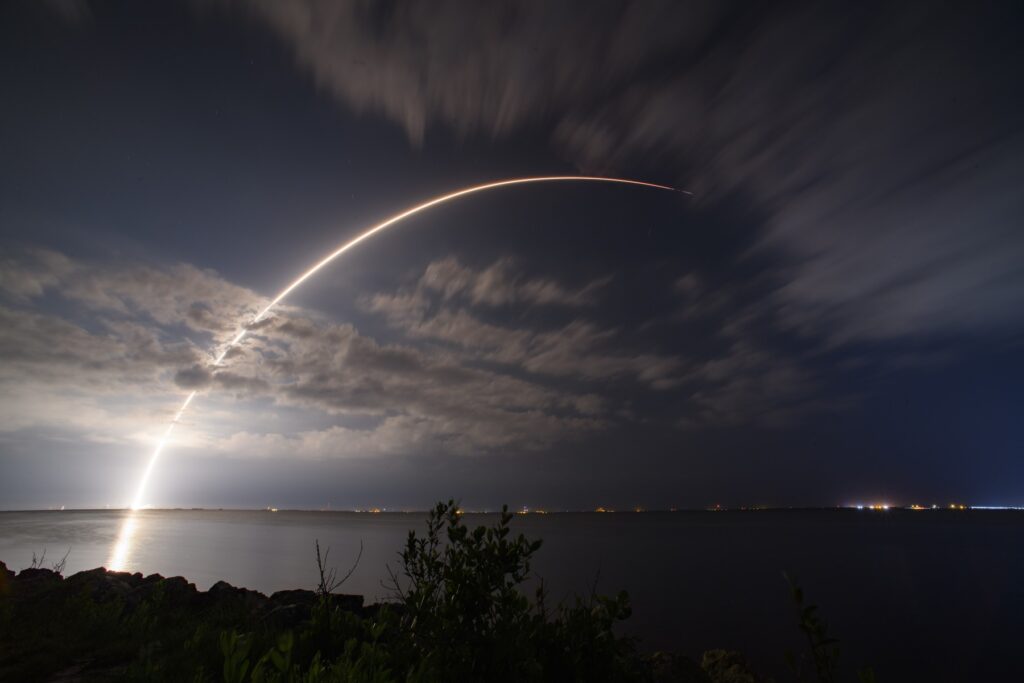
On a recent mission, a Falcon 9 rocket successfully launched from Cape Canaveral, Florida, carrying 23 Starlink satellites into low Earth orbit. This launch occurred a day later than originally scheduled, as SpaceX had to cancel the first attempt shortly before takeoff for undisclosed reasons.
This mission was particularly notable as it marked a first-time launch for this specific Falcon 9 rocket, highlighting the company’s ongoing efforts in rocket reusability—an area where SpaceX has become a pioneer in the aerospace industry.
Approximately eight minutes after liftoff, the rocket’s first stage completed its landing, successfully touching down on SpaceX’s drone ship “Just Read the Instructions,” stationed in the Atlantic Ocean. Meanwhile, the upper stage of the Falcon 9 continued its journey, releasing the 23 Starlink satellites into their intended orbits about 65 minutes post-launch.
Starlink is recognized as the largest megaconstellation of satellites ever built, currently comprising around 7,500 operational satellites. This ambitious project aims to provide global internet coverage and further bolster SpaceX’s position in the satellite communications sector.


