
Sumary of Microseismic Research on Earth’s Structure
Recent research highlights the significance of microseisms—tiny seismic waves generated by oceanic interactions with the Earth’s crust—as a method for exploring elusive geological structures beneath the Earth’s surface. This is particularly relevant in regions like the North Atlantic, where significant earthquakes are rare. The study, conducted by seismologists Hrvoje Tkalčić and Abhay Pandey from the Australian National University, utilizes these microseismic phenomena to gather alternative data for investigating the Earth’s internal structure beneath Australia.
Microseisms and Their Origin
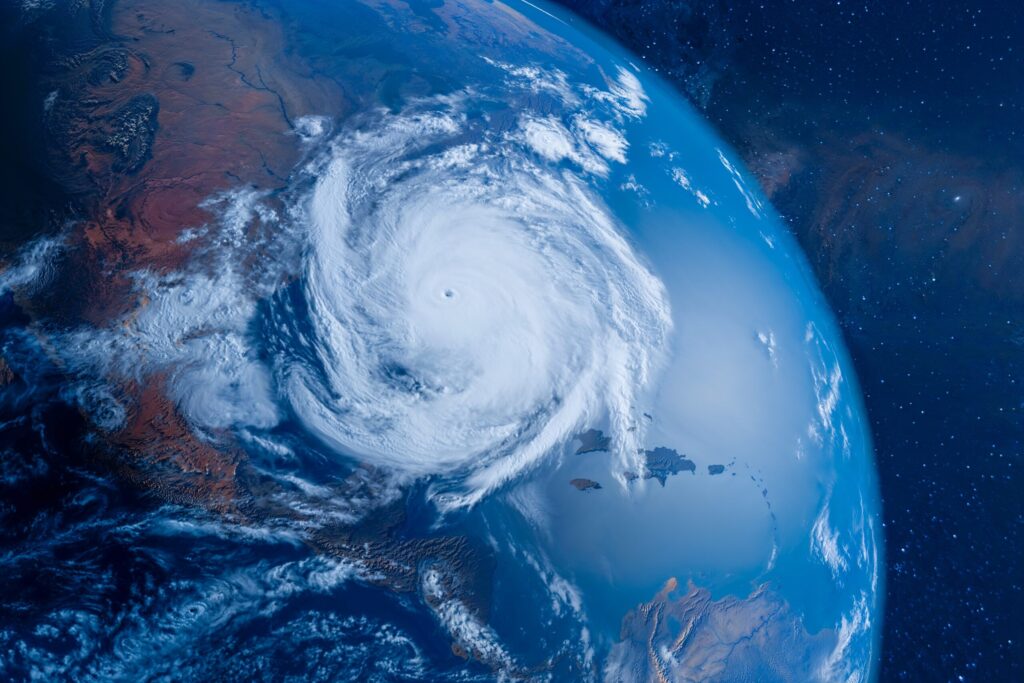
Microseisms arise from intense storm activity, such as cyclones, which produce powerful acoustic energy that reverberates across the planet. However, by the time these vibrations reach the Earth’s core, they become incredibly subtle. To detect these tiny signals, Tkalčić and Pandey deployed ultra-sensitive spiral sensor networks in tranquil, isolated regions of Australia. The researchers combined data collected over several days to pinpoint areas where the microseismic signals were strongest, which yielded insights regarding the propagation and sources of seismic waves.
Detection Challenges
The amplitude of these signals is often so low that they fall below the detection threshold of individual sensors, necessitating specially designed instruments to capture them. Through their research, Tkalčić and Pandey successfully traced these microseismic waves to waters near Greenland and Newfoundland, regions affected by winter storms. Their findings indicate that the Newfoundland basin is a substantial and consistent source of microseisms, occurring nearly daily during the study period, likely associated with the frequent movement of cyclones in winter months.
Implications for Future Exploration
This innovative method of detecting seismic signals could extend beyond Earth, aiding in the exploration of other planetary bodies. The researchers suggest that, as humanity advances toward interplanetary travel, the energy produced by storms on other planets could be harnessed to assist in probing the internal structures of those celestial bodies, such as planets or moons with atmospheres.
The research was published in Seismological Research Letters, showcasing a novel approach that could significantly enhance our understanding of Earth and potentially other worlds in the future.
Related Research Topics
The study’s findings also raise intriguing questions about various geological phenomena. Some related research includes properties of the Earth’s core, such as its mysterious oscillations occurring every 8.5 years, the unusual water flow within the core that might contribute to an enigmatic layer, and the solid nature of the inner core despite extreme temperatures exceeding those of the Sun’s surface. Additionally, hypotheses suggest that the Earth’s core may be surrounded by remnants of ancient oceanic crusts.
Conclusion
This research underscores the potential for using ocean-related seismic activity as a tool for geological exploration. By tapping into environmental energies, researchers can open new frontiers in understanding not only the Earth’s internal composition but also the geology of other planets, paving the way for future explorations.


