
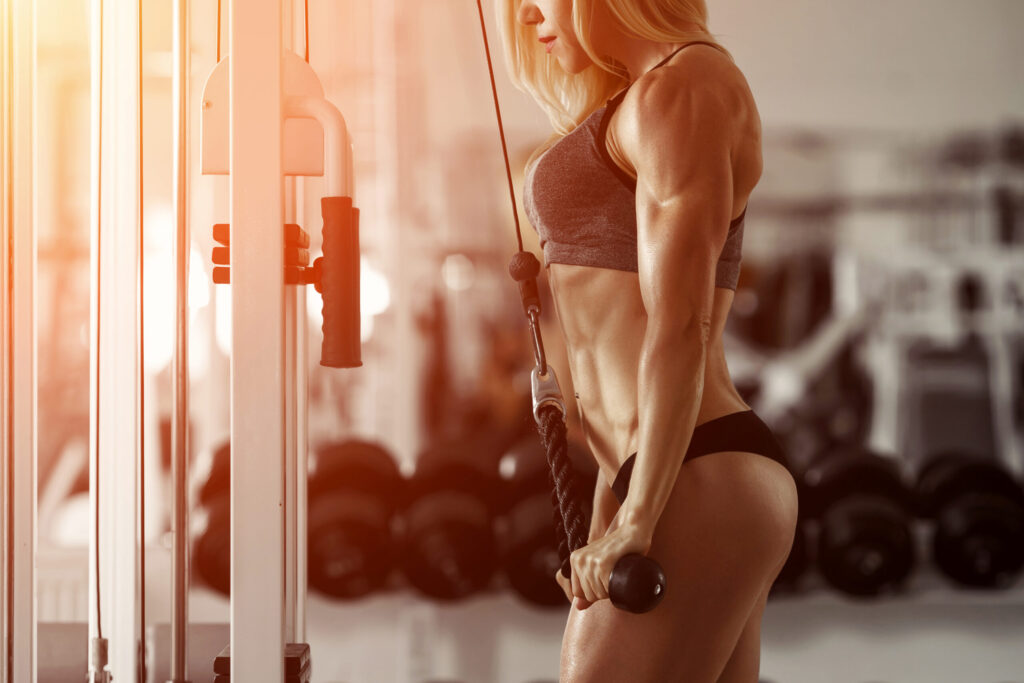
The perception of muscular women has historically oscillated between admiration and stigma. Often labeled as “difficult” or “avoidant,” these women challenge societal norms regarding femininity and beauty, triggering discussions rooted in cultural, gender, and inherent identity constructs.
When a woman is deemed “too muscular,” the judgment transcends aesthetic preferences; it questions her femininity. This societal scrutiny raises the provocative query: Does an overtly muscular physique disqualify her from being recognized as a “real woman”? Moreover, such labeling can carry accusatory implications, suggesting potential steroid use or unnatural performance enhancement.
Celebrated ballerina Misty Copeland, during a discussion with Harvard students in 2017, illuminated this issue, asserting that being told she has a “too muscular” body is essentially code for “your skin is wrong” (The Guardian). Similarly, tennis superstar Serena Williams expressed her frustrations in a 2016 interview, recounting experiences where she was tagged as “too muscular, too masculine, and then, paradoxically, too sexy.” These narratives highlight the intersectionality of race and body image within elite sports, suggesting that “too muscular” may also encompass deeper racial biases that imply certain bodies do not belong in these arenas.
Amber Fitzsimmons, an anatomy professor at the University of California, offers a straightforward interpretation: “Too muscular means too masculine.” This persistent fear of embodying masculinity in women’s physical endeavors continues to inform public attitudes towards female athletes.
The stigma surrounding muscularity extends beyond cisgender women to include transgender women and athletes with naturally elevated testosterone levels. Recent debates over transgender women’s participation in sports often center on accusations of having “extra muscle,” raising questions about fairness in competition. In response, events like the Boston and New York Marathons have introduced non-binary categories, signifying the ongoing evolution of discussions about equity and identity in sports.
Additionally, myriad pseudoscientific theories about female biology have often served to undermine women’s positions of power. Menopause, for instance, has been wielded as a rationale to label women leaders as “unstable,” disregarding the influence of testosterone—a hormone correlated with impulsivity, which is predominantly present in men. Such biases reflect how myths surrounding female biology have historically shaped societal perceptions of strength and authority.
In conclusion, the ongoing dialogue about muscular women and athleticism challenges traditional beauty standards and urges society to rethink definitions of power and femininity. It is crucial to recognize and celebrate diverse body types in pursuit of a more inclusive understanding of women’s strength.


