
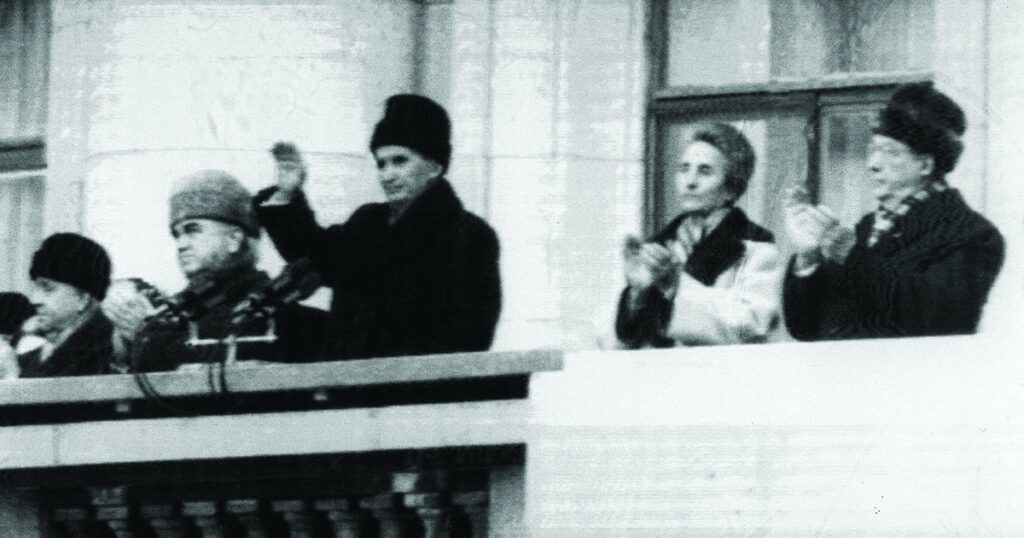
The examination of Iulian Vlad’s case reveals several key observations about the inquiry and its broader implications. Iulian Vlad was initially investigated for complicity in genocide alongside fellow members of the Central Committee of the Romanian Communist Party during a meeting on December 17, 1989. The only piece of evidence against him was a fabricated transcript of that meeting, which itself would not have been a decisive factor even if authentic.
The context of the meeting reflects the paranoid atmosphere of Nicolae Ceaușescu’s regime. Ceaușescu called the meeting not to seek advice but to reprimand those he believed had failed to execute his orders. This setting resembles typical authoritarian practices, where leaders publicly chastise subordinates rather than engage in genuine decision-making processes.
The prosecution’s case against Vlad hinges on ambiguous dialogues in the transcript, which the prosecutors interpret in a biased manner to imply his responsibility for ordering security forces to open fire on protesters. However, in reality, the security forces did not fire because they had not received such orders. Apostol Stan’s work highlights the operational principles within the security apparatus, emphasizing that they were instructed to avoid engagement during peaceful protests. Vlad, who was informed about the shifting political landscape leading up to December 1989, made a calculated decision not to oppose or support Ceaușescu strongly, favoring survival instead.
Vlad was aware of the imminent collapse of the regime, and his approach reflected a pragmatic understanding of the dangerous political climate. Rather than betraying Ceaușescu outright, he navigated the situation with a degree of detachment, recognizing that aligning too closely with the regime would be suicidal.
The accusations against Vlad illustrated the disconnect between judicial narratives and the actual circumstances on the ground. The prosecutor’s charges that the Securitatea (Romanian secret police) had fired on demonstrators were based on the misleading interpretation of the meeting’s transcripts. Efforts to secure testimonies from other participants in the meeting aimed to corroborate the prosecution’s claims but were met with resistance from several key figures who declined to implicate Vlad openly, revealing a degree of solidarity among them.
This examination underscores a crucial point about the inner workings of dictatorship: intelligence services often have a clearer picture of reality than political leaders, allowing individuals like Iulian Vlad to assess the precariousness of the regime more effectively.
In conclusion, the case of Iulian Vlad illustrates the complexities of accountability in authoritarian contexts and how evidence can be misconstrued in political trials. Vlad’s choice to maintain a distance from Ceaușescu and his regime reveals the survival strategies adopted by many within the Securitate as the old order crumbled. The judicial attempts to pin culpability on him possess more to do with the needs of the new political order than with the objective realities of his actions during a tumultuous historical moment.


