
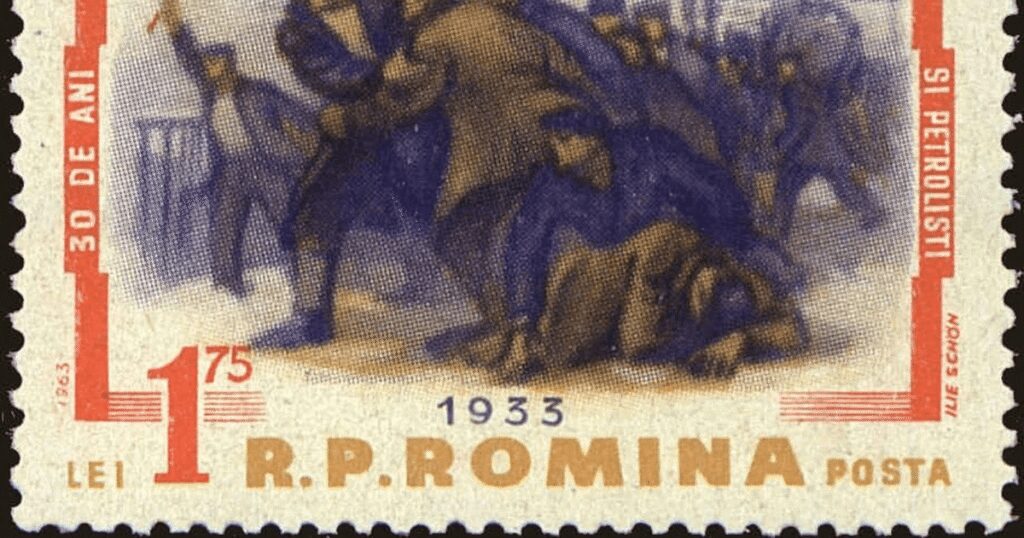
In 1933, the Grivița Workers’ Strike became a hallmark of protest against the Romanian government, which culminated in a brutal repression of labor movements. Communist historiography has largely focused on the events of the night of February 15-16, 1933, framing it as a significant moment in the struggle against the regime. Yet, the broader context surrounding these events indicates a much more complex situation involving socio-economic struggles that motivated the protests.
Key events leading to the strike began with the government of Alexandru Vaida Voevod of the National Peasant Party (PNȚ), which enacted a 10-12% salary cut for civil servants, excluding military and judicial staff, from January to March 1933. On February 2, workers initiated a strike, which led to negotiations with government officials, including Eduard Mirto, the Minister for Communications. However, the government’s response escalated tensions, including the underhanded passing of martial law on the night of February 3-4, 1933, bordering on political oppression.
As unrest grew, on February 14-15, the government arbitrarily arrested strike leaders. The strike intensified on February 15, with workers occupying the Grivița workshops. The situation turned deadly on February 16 when military forces violently suppressed the strike, resulting in numerous casualties. On the same day, the parliament convened to address the chaos, mistakenly attributing the unrest purely to communist instigation rather than acknowledging the role of economic hardship and injustice faced by workers, as highlighted by politician Corneliu Zelea Codreanu, who identified hunger and injustice as primary catalysts for the revolt.
Communist historiography later revised the narrative of the Grivița events to position them as a direct manifestation of communist organization and leadership, claiming it as a moment of glory for the Communist Party of Romania (PCR). This portrayal distorted the actual roots of the revolt, which were grounded in genuine socio-economic grievances rather than orchestrated by the communists.
Post-1989 analyses suggest that the communist narrative appropriated Grivița, portraying it as part of a broader conspiracy fueled by Moscow, which the government accepted. Some PNȚ officials, led by Armand Călinescu, propagated the idea that the strikes represented a ‘plot’ rather than legitimate worker discontent. This framing contributed to a narrative that justified harsh measures, including declaring a state of siege, which stripped citizens of their civil rights in the name of fighting communism.
Through this lens, the PCR, perceived as a mere satellite of Soviet influence, inadvertently gained unexpected legitimacy, framing itself as the vanguard of revolutionary change. The government’s portrayal of the protests as a threat necessitated military intervention, culminating in tragic violence against the striking workers.
Overall, while the communist narrative simplified the complex social dynamics of the Grivița revolt, the actual events were driven by economic realities and widespread discontent among workers rather than direct communist plotting. This dissonance between the true causes and the constructed historical memory illustrates the broader struggle over the narrative of labor rights and social justice in Romania during that tumultuous period.


