
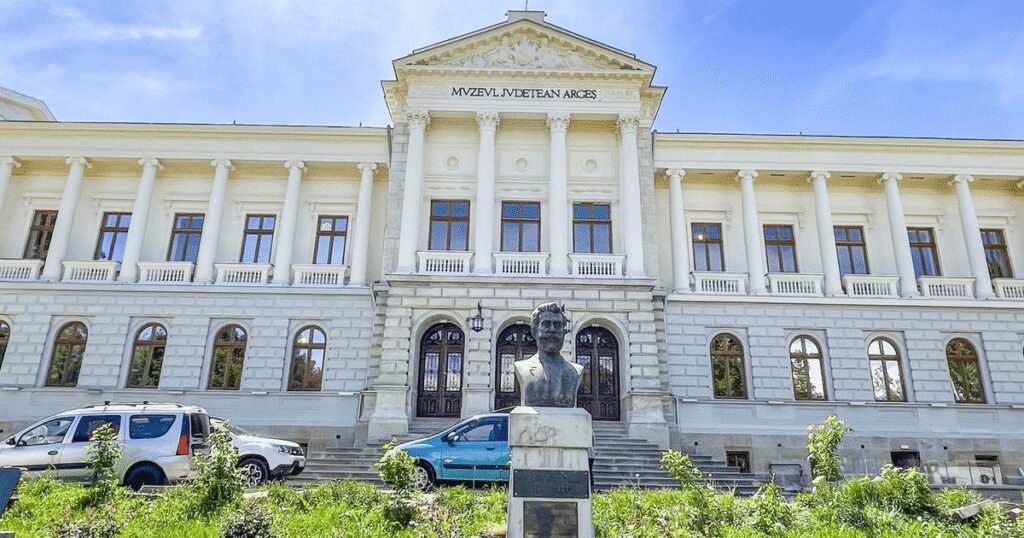
The Județean Museum of Argeș, a national historical monument, has undergone significant restoration and strengthening through a large project funded by the European Union, initiated by the Argeș County Council. This restoration has restored the museum’s former splendor while adapting it to meet modern cultural needs, as outlined in a statement from the council.
Project Overview
The renovation project, valued at approximately 25 million lei, is nearing completion. Final preparations include cleaning and replacing a transformer, necessary steps before the official reception of the project. Marius Nicolaescu, the Vice President of the Argeș County Council, highlighted the historical significance and financial aspects of the project, thanking the council staff and contractors involved. He expressed hope that visitors to the museum will be pleased with the results of the renovations.
Historical Context
The museum is housed in a building that previously served as the Prefectura Argeș, a historic landmark built between 1898 and 1899 in an eclectic style, designed by architect Dimitrie Maimarolu, and located on the site of the former Schit Buliga. While the practice of museology in Argeș dates back to the mid-19th century, it wasn’t until 1970 that the Județean Museum of Argeș received appropriate exhibition space.
The museum opened the History Section on the first floor in 1974 and the Natural Sciences Section in 1977, marking it as a key cultural institution in the region. Since 1977, it has also been the first Romanian and Southeast European museum dedicated to disseminating information necessary for environmental conservation.
Importance of the Museum
The restored museum not only serves as a cultural cornerstone for the city of Pitești and Argeș County but also acts as an important resource for historical education and environmental awareness. This initiative signifies the commitment to preserve not only the physical space but also the cultural heritage and historical narratives represented within the museum’s collections.
As the museum prepares to welcome back visitors, efforts continue to secure additional funding for future exhibitions, ensuring that the rich history and natural resources of the region remain accessible and engaging to the public.


