
The text reflects on the nostalgia some Romanians feel for the harsh communist dictatorship established by the Soviet tanks in 1945, particularly for Nicolae Ceaușescu, the last communist tyrant. Despite a historical context that showcases his significant failings, a faction of the populace commemorates him every January 26, clinging to the notion that he was a true patriot who contributed positively to the nation.
The reality, however, paints a starkly different picture of Romania under Ceaușescu’s regime, which led to catastrophic outcomes. By the 1980s, the government was engaged in rapid repayment of foreign debt, signaling the onset of a socioeconomic collapse. Ceaușescu’s advice to economize in areas like transport allowed for the deterioration of public transport infrastructure. While the Bucharest metro system was touted as a success, the broader public transport network was disintegrating.
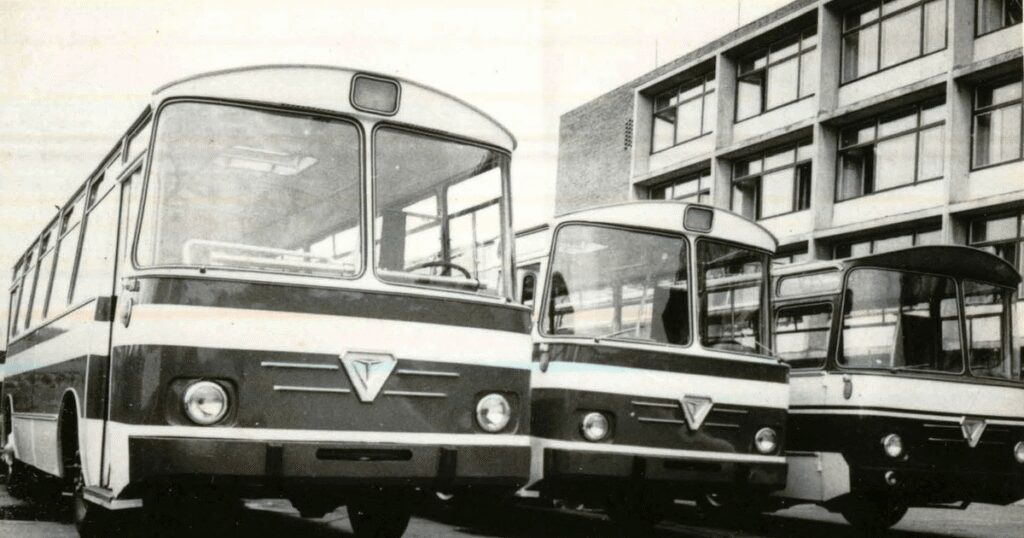
In 1980, there were 11,601 buses across Romania’s 187 motorized cities. Each bus suffered from high diesel consumption, and new acquisitions were not permitted, leading to a situation where many buses became unusable due to a lack of spare parts and tires. By the end of the communist regime, only 6,385 buses remained operational, and smaller towns were left with only a symbolic presence of state transportation—a stark contrast to the government’s promises of scientific solutions for community issues.
Despite Romania housing a factory dedicated to bus production capable of meeting internal demand and fostering export capabilities, Ceaușescu’s policies relegated the Romanian people to lives of deprivation. By December 1989, Romania was arguably the most impoverished country in the Eastern Bloc, potentially only rivaled by war-torn Albania. Ceaușescu’s party leadership had turned against the Romanian populace, yet it managed to propagate the idea of a so-called “Golden Age” during which the nation purportedly progressed.
The commentary concludes by highlighting the irony of the government’s claims versus the lived experiences of citizens, pointing to the disconnect between ideology and reality in socialist Romania.


