
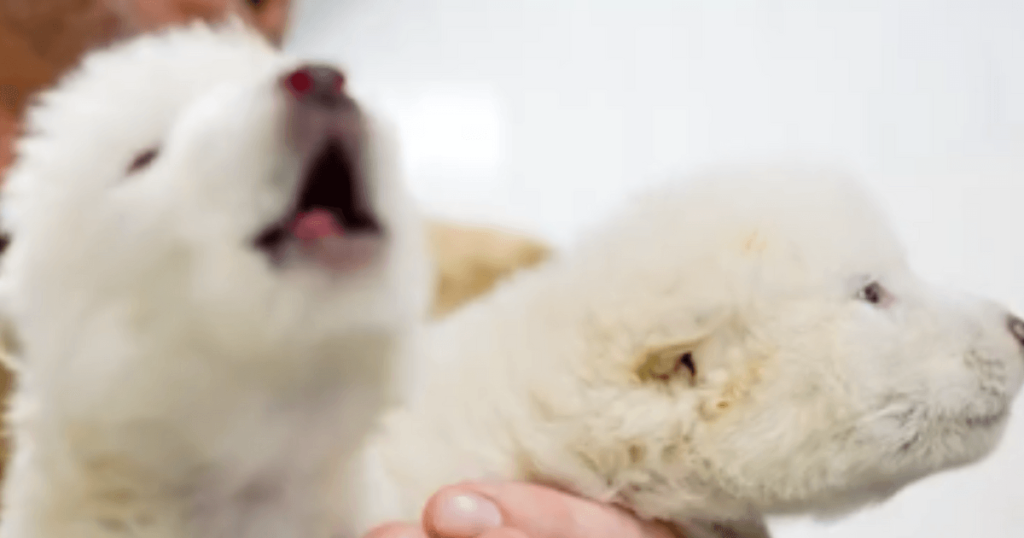
American company Colossal Biosciences claims to have brought back to life a species of wolf that went extinct 10,000 years ago. They introduced two wolves, named Romulus and Remus, born on October 1, 2024, and Khaleesi, born on January 31, 2025. According to them, these animals are the product of genetic modifications based on a complete genome of Canis dirus (the dire wolf), meticulously reconstructed from ancient DNA found in a 13,000-year-old tooth from Ohio and a 72,000-year-old inner ear bone from Idaho.
To facilitate this project, Colossal also utilized gray wolves, which are the closest living relatives to the extinct species. The team made specific genetic alterations to the gray wolf DNA to mirror characteristics of the dire wolf, such as lighter fur coloration, variations in hair length and body patterns, as well as changes in body size and musculature.
Moreover, surrogate gray wolves were used to give birth to these pups. Although Romulus and Remus exhibit physical traits and vocalizations similar to the Canis dirus, they are not a perfect genetic match to the extinct species. It’s important to note that the wolves are not being taught to survive in the wild, with Beth Shapiro, the company’s director, acknowledging that while it would be interesting for them to understand the natural behaviors of Canis dirus, they are heavily monitored and do not roam freely: “They can’t step on a twig without us knowing about it,” she stated to the New York Times.
Adam Boyko, a researcher at Cornell University who is not involved in the project, expressed excitement about the prospect of creating functional versions of extinct species. However, he pointed out that these wolves do not truly represent Canis dirus, as they lack the opportunity to learn and demonstrate natural pack behaviors that would be essential for their survival in the wild.
The British scientific magazine The New Scientist expressed skepticism regarding Colossal’s claim, arguing that no true Canis dirus has been revived. They noted that the gray wolf genome contains approximately 2.4 billion base pairs, leaving room for millions of differences from the extinct species’ genome.
In summary, while Colossal Biosciences promotes its work on resurrecting the dire wolf as a notable achievement in genetic science, it faces criticism and skepticism from the scientific community regarding the authenticity of their claims and the viability of the animals they have created.


